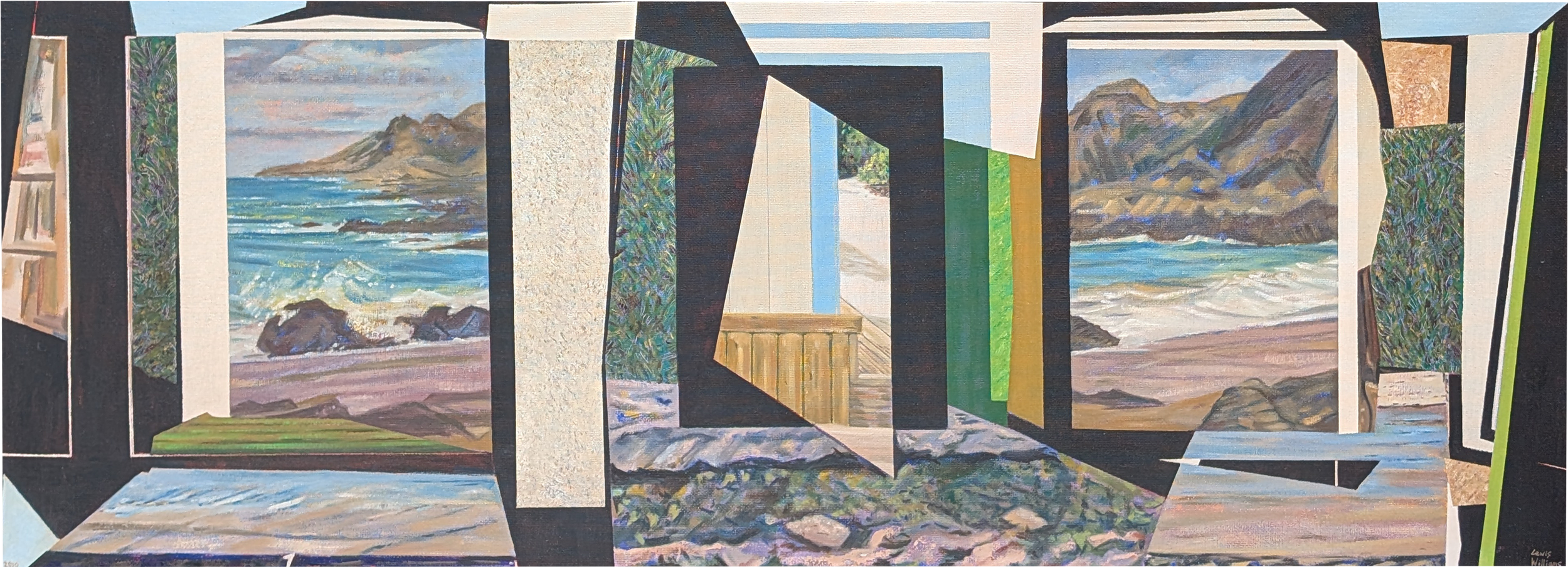
The threshold between worlds
“These are not paintings that announce themselves immediately. They ask something of you, and they reward it.”
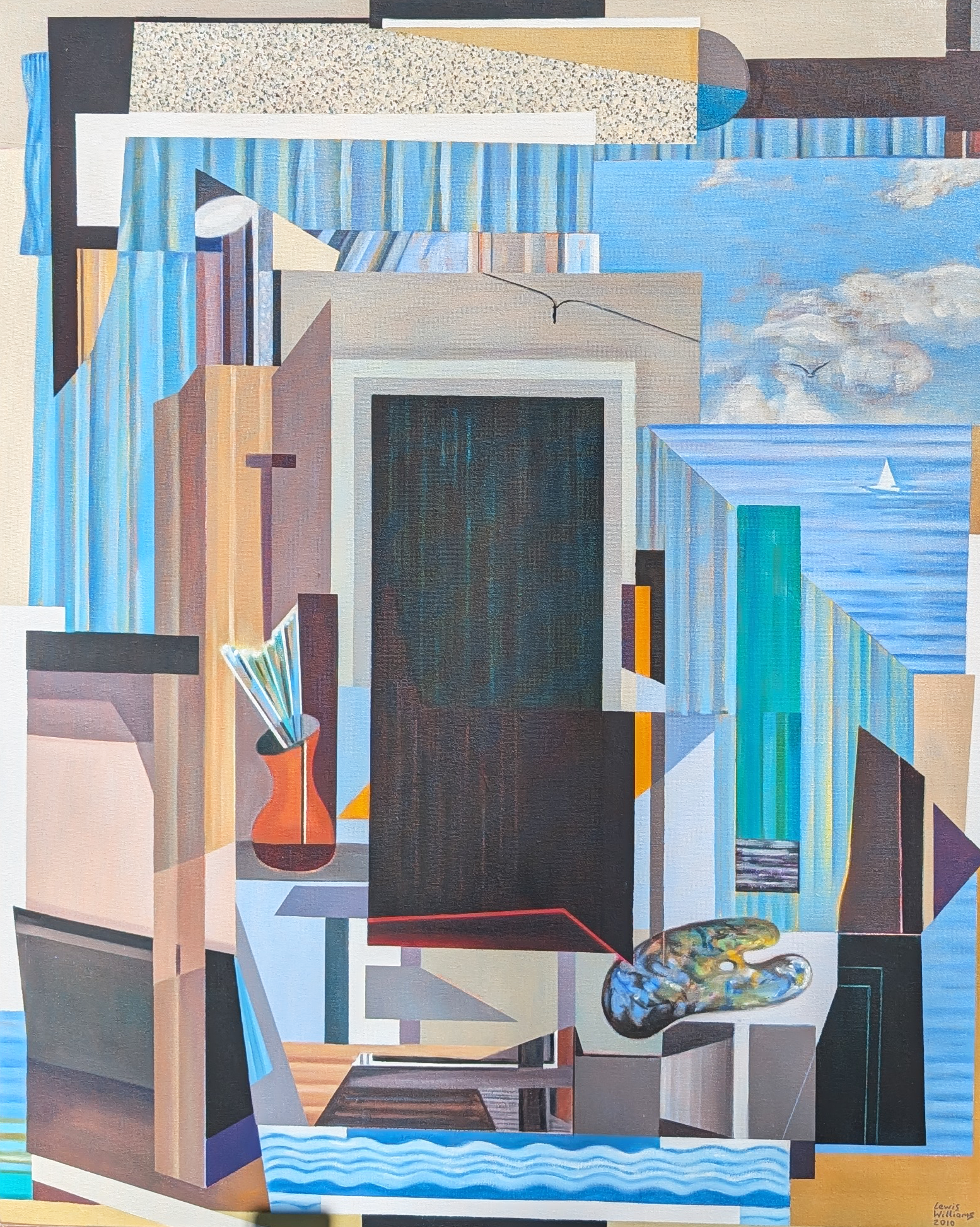
A J. Lewis Williams painting rarely begins where it ends. A pastel study becomes a collage; a collage becomes a small oil; a small oil becomes a larger one, and somewhere along that journey, something unexpected happens. That surprise, he says, is the whole point.
At the heart of his process is collage. His studio holds boxes of cut paper, fragments of coloured magazines and advertisements, which he arranges and rearranges, photographing each stage before anything is fixed down. Chance plays a deliberate role. The way a piece of paper falls, slightly left or right, can open up an entirely new direction.
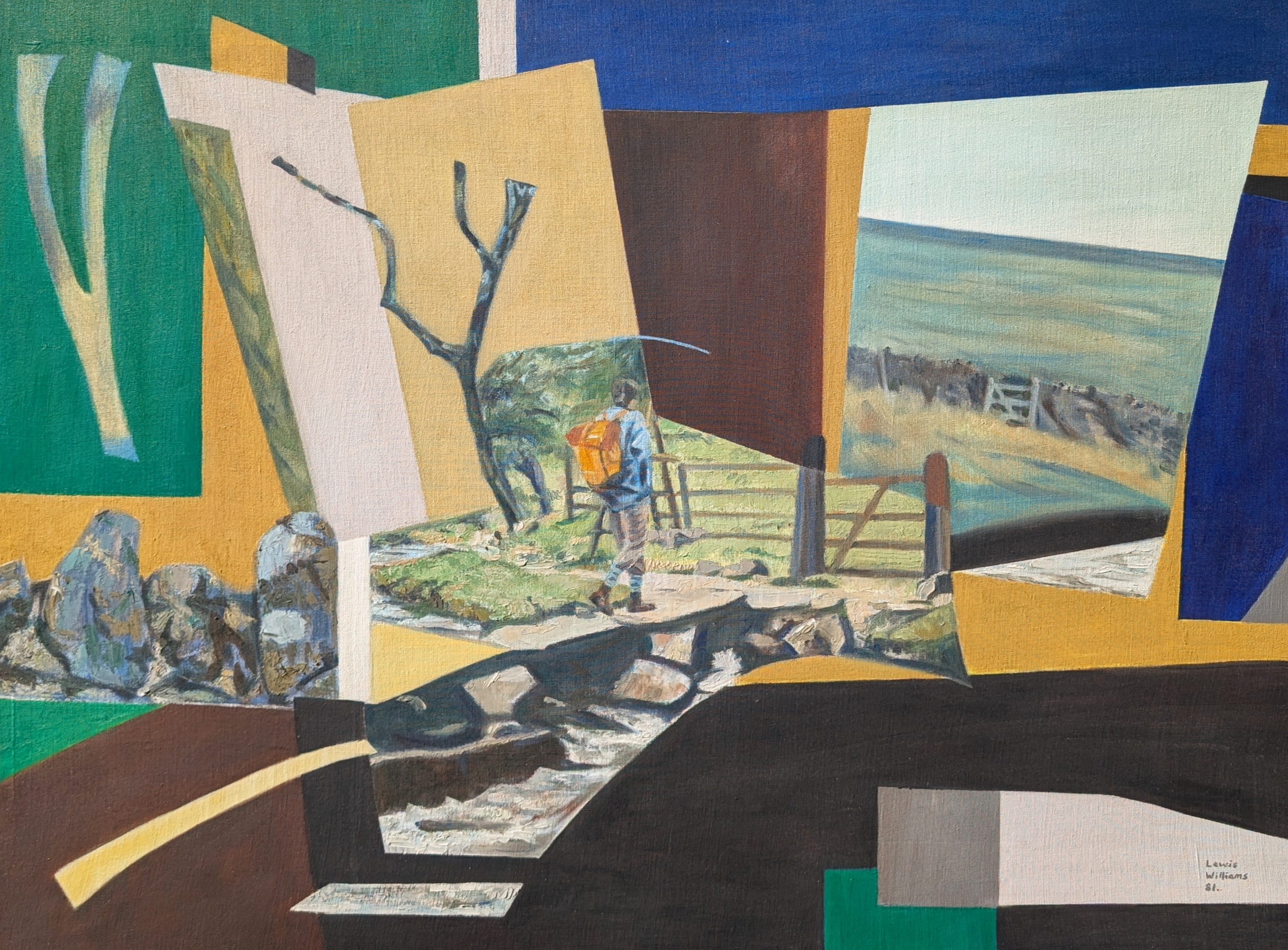
His influences run deep: Braque, Chardin, Vermeer, painters who invested extraordinary time in individual works. He makes his own boards, builds up layers of underpainting in unexpected colours, and works surfaces until texture itself becomes part of the meaning. Standing in front of one of his paintings, you notice things a screen can never show you.
He describes his work as having a dense intendedness, tightly packed with thought and observation, but built to be slowly unravelled by the viewer.
What lies on the other side?
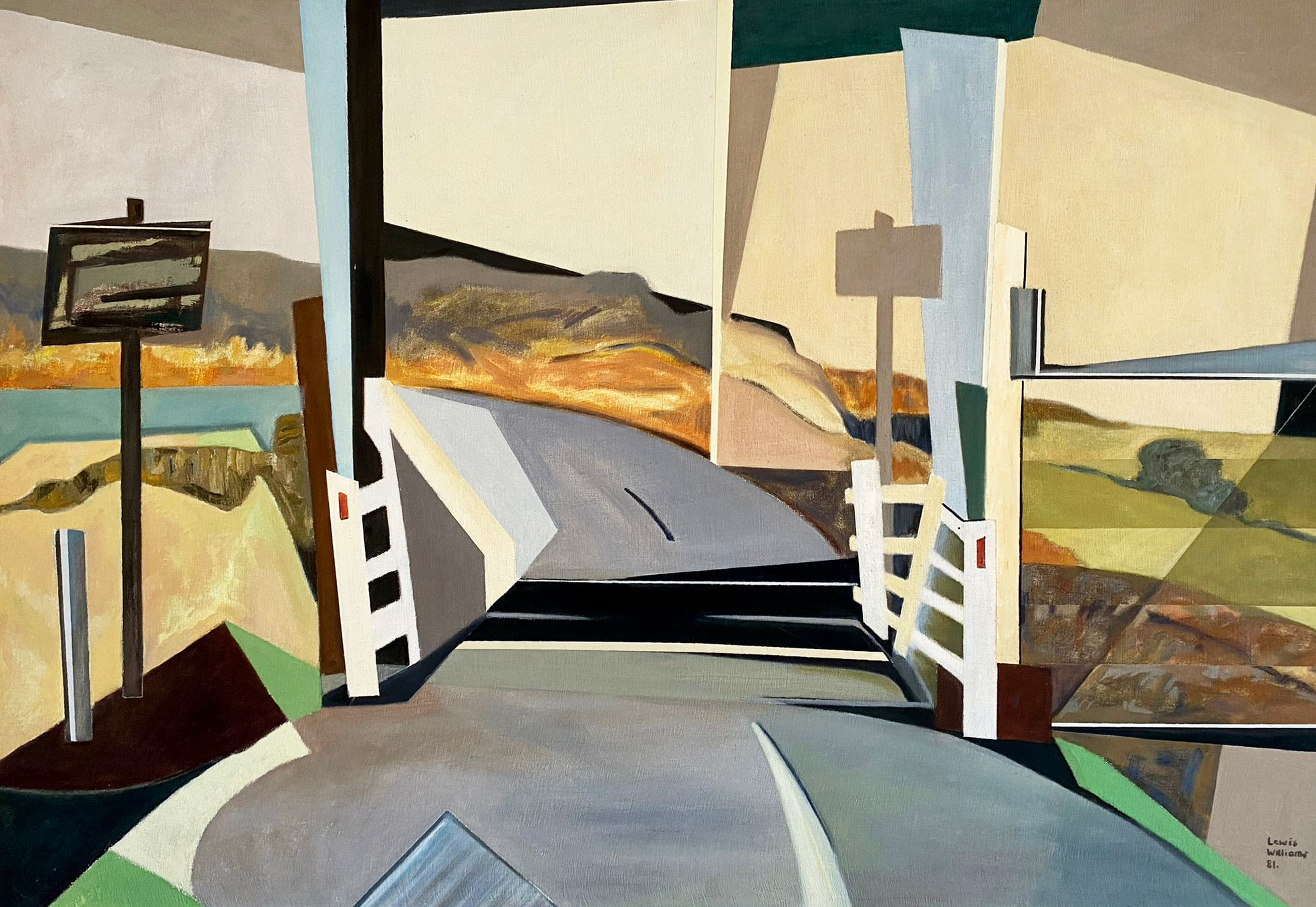
This question runs through everything J. Lewis Williams paints.
It appears in his cattle grids, those humble, functional objects that mark a boundary between one place and another, and which in his hands become thresholds between this world and whatever lies beyond. It appears in his gates and bridges, his dark central doorways, his cemeteries. It is there in the signpost in one of his most celebrated works that reads, simply, World's End.
This preoccupation with transition, from here to there, from the known to the unknown, draws on Celtic and Welsh mythology as much as it does on Christian tradition. The sense of an underworld, a beyond, a veil between realms, is ancient in Welsh culture, and Lewis Williams feels it running through his work, whether he consciously intends it or not.
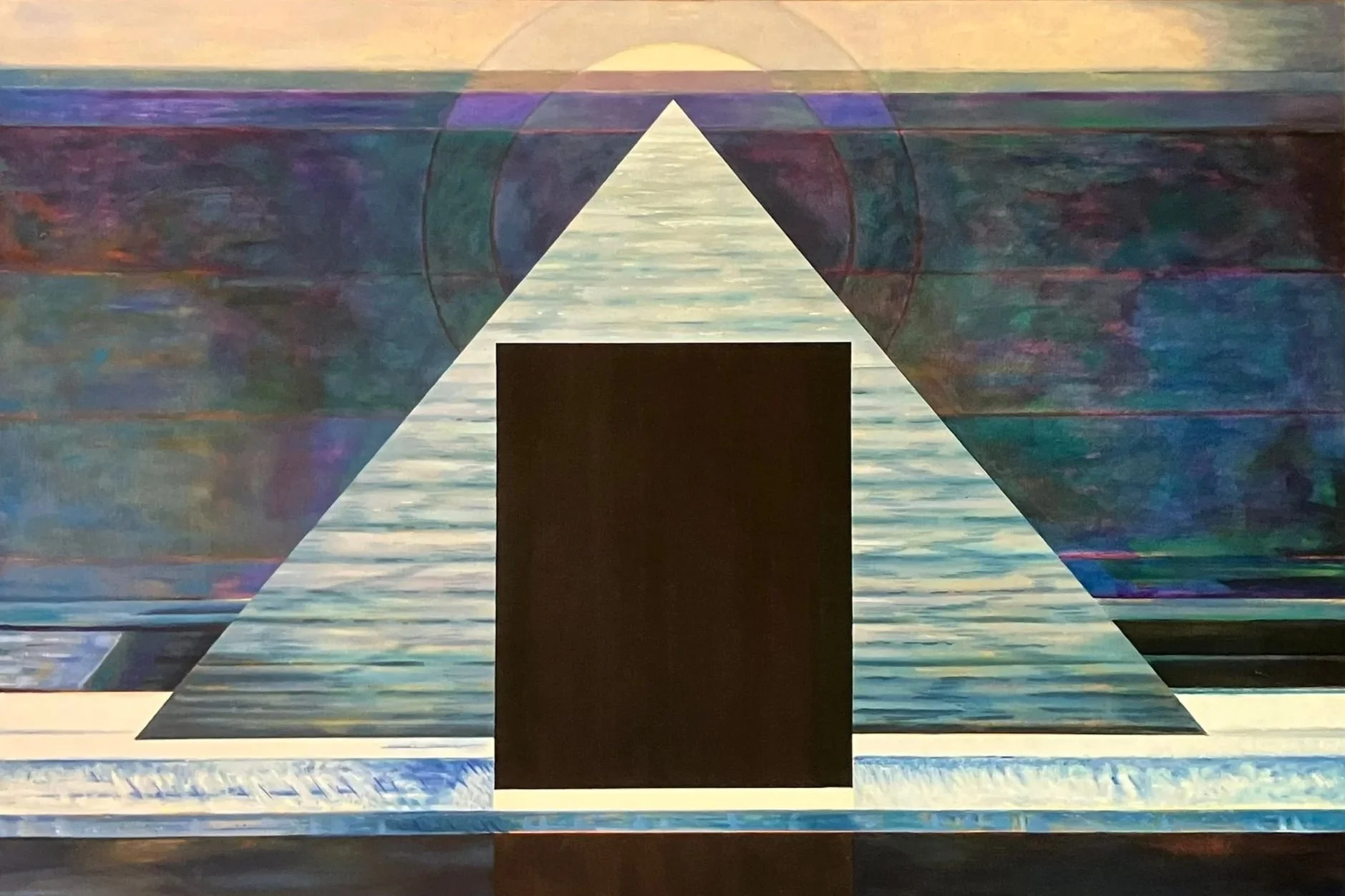
His pyramids take this further still. Painted in water but built of stone. Standing on sky instead of earth. The most solid things rendered fluid; the most fleeting rendered permanent. These are not visual tricks but serious philosophical statements, reflecting his deep engagement with physics and cosmology.
J. Lewis Williams explores the idea, familiar to scientists and mystics alike, that reality is not fixed but in constant flux, a perpetual dance between things and non-things.
Cubism gave him the language to explore all of this. Not the decorative cubism of some of its practitioners, but cubism as a tool for asking the hardest questions, about matter, about mortality, about what endures.
Explore other sections